Things I learned · chess

Teaching Chess Is Not the Same as Playing It

I thought knowing how to play chess meant I could teach it. Then a lesson about forks made me realize how wrong I was.
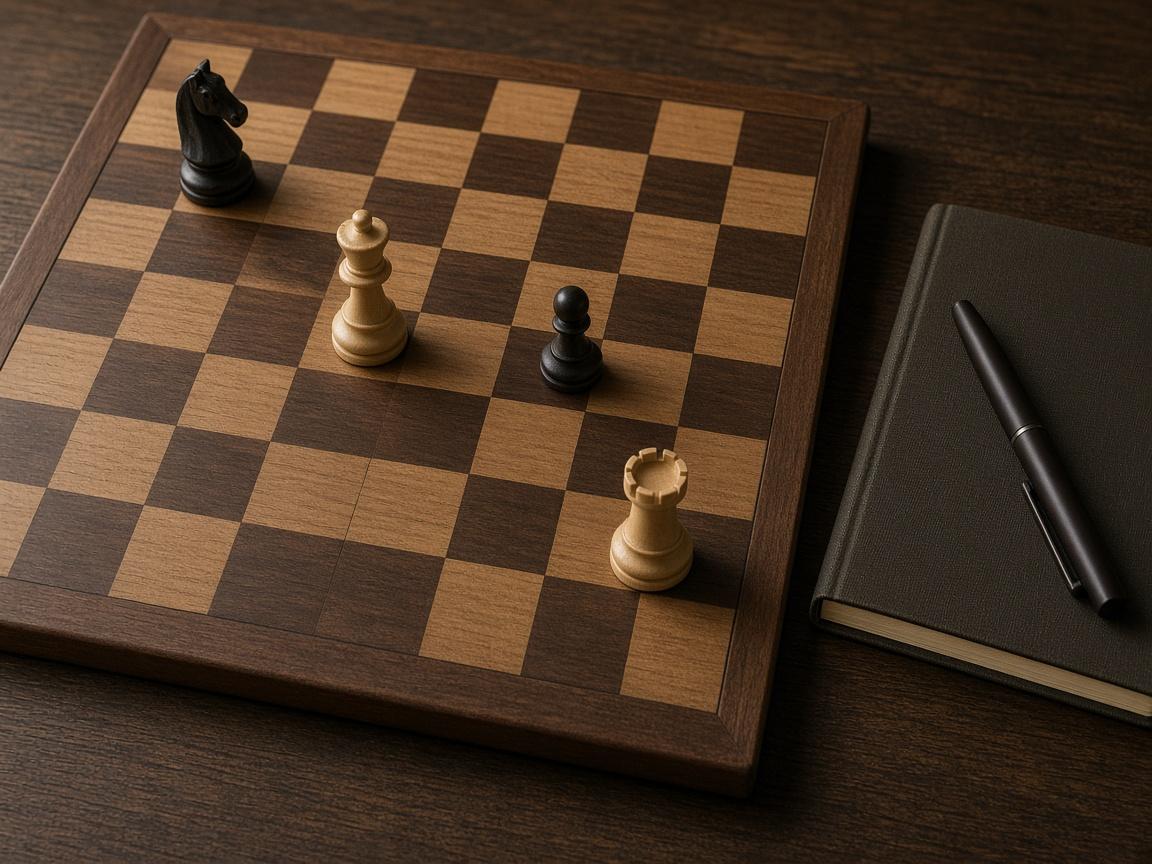
A wooden chessboard with a few pieces and a closed notebook. Stand-in photo.
Stand-in photo. Replace with a note, position, or session photo.

What happened

I’ve played chess for most of my life. Over the years, I’ve spent countless hours practicing tactics, analyzing games, and learning from mistakes. So when I started coaching younger students through our nonprofit chess organization, I figured teaching would come pretty naturally. I knew the concepts. I understood the strategies. How hard could explaining them really be?

Turns out, pretty hard.

I remember one session when I was teaching students about forks. In chess, a fork happens when one piece attacks two or more pieces at the same time. I explained the idea using chess positions, but some students still didn’t understand. I could see that repeating the same explanation wasn’t getting us anywhere.

Then I pulled up a picture of an actual kitchen fork. I pointed to the metal prongs and explained how a fork could pick up multiple pieces of food. Then I connected that idea back to chess: just like a kitchen fork can reach multiple pieces of food, a chess piece can attack multiple pieces on the board.

Suddenly, I had a completely different way to explain the same concept.

I had assumed students would understand something simply because I understood it. I was explaining chess from my perspective as a player instead of thinking about how a beginner might see the board.

What I think now

I used to think a good chess player should naturally be a good chess teacher. Teaching isn’t about showing people how much you know. It’s about helping them understand something they didn’t understand before.

I started thinking more carefully about how to explain concepts in simple, familiar ways. Instead of always starting with chess terminology, I look for examples students can connect to. I also focus more on asking questions and letting students think instead of immediately giving them the answer.

When I’m coaching, I try to pay attention to how students respond rather than just whether I’ve finished explaining a topic. If something isn’t making sense, I look for another way to explain it. Sometimes that means using a simpler chess position. Other times, it means connecting the concept to something completely outside chess.

This experience also influenced My Next Move Coach, the AI chess coaching app I’m building with my brother. I want students to have a coach that guides their thinking rather than simply telling them what move to make.

Knowing something and teaching something are two different skills. And sometimes, the best way to explain a chess move has nothing to do with chess at all.

Related project: A Chess Coaching Experiment

Lesson

Teaching Chess Is Not the Same as Playing It

I thought knowing how to play chess meant I could teach it. Then a lesson about forks made me realize how wrong I was.

A wooden chessboard with a few pieces and a closed notebook. Stand-in photo.

What happened

I’ve played chess for most of my life. Over the years, I’ve spent countless hours practicing tactics, analyzing games, and learning from mistakes. So when I started coaching younger students through our nonprofit chess organization, I figured teaching would come pretty naturally. I knew the concepts. I understood the strategies. How hard could explaining them really be?

Turns out, pretty hard.

I remember one session when I was teaching students about forks. In chess, a fork happens when one piece attacks two or more pieces at the same time. I explained the idea using chess positions, but some students still didn’t understand. I could see that repeating the same explanation wasn’t getting us anywhere.

Then I pulled up a picture of an actual kitchen fork. I pointed to the metal prongs and explained how a fork could pick up multiple pieces of food. Then I connected that idea back to chess: just like a kitchen fork can reach multiple pieces of food, a chess piece can attack multiple pieces on the board.

Suddenly, I had a completely different way to explain the same concept.

I had assumed students would understand something simply because I understood it. I was explaining chess from my perspective as a player instead of thinking about how a beginner might see the board.

What I think now

I used to think a good chess player should naturally be a good chess teacher. Teaching isn’t about showing people how much you know. It’s about helping them understand something they didn’t understand before.

I started thinking more carefully about how to explain concepts in simple, familiar ways. Instead of always starting with chess terminology, I look for examples students can connect to. I also focus more on asking questions and letting students think instead of immediately giving them the answer.

When I’m coaching, I try to pay attention to how students respond rather than just whether I’ve finished explaining a topic. If something isn’t making sense, I look for another way to explain it. Sometimes that means using a simpler chess position. Other times, it means connecting the concept to something completely outside chess.

This experience also influenced My Next Move Coach, the AI chess coaching app I’m building with my brother. I want students to have a coach that guides their thinking rather than simply telling them what move to make.

Knowing something and teaching something are two different skills. And sometimes, the best way to explain a chess move has nothing to do with chess at all.

A Chess Coaching Experiment

Lesson

Teaching Chess Is Not the Same as Playing It

I thought knowing how to play chess meant I could teach it. Then a lesson about forks made me realize how wrong I was.

A wooden chessboard with a few pieces and a closed notebook. Stand-in photo.

What happened

I’ve played chess for most of my life. Over the years, I’ve spent countless hours practicing tactics, analyzing games, and learning from mistakes. So when I started coaching younger students through our nonprofit chess organization, I figured teaching would come pretty naturally. I knew the concepts. I understood the strategies. How hard could explaining them really be?

Turns out, pretty hard.

I remember one session when I was teaching students about forks. In chess, a fork happens when one piece attacks two or more pieces at the same time. I explained the idea using chess positions, but some students still didn’t understand. I could see that repeating the same explanation wasn’t getting us anywhere.

Then I pulled up a picture of an actual kitchen fork. I pointed to the metal prongs and explained how a fork could pick up multiple pieces of food. Then I connected that idea back to chess: just like a kitchen fork can reach multiple pieces of food, a chess piece can attack multiple pieces on the board.

Suddenly, I had a completely different way to explain the same concept.

I had assumed students would understand something simply because I understood it. I was explaining chess from my perspective as a player instead of thinking about how a beginner might see the board.

What I think now

I used to think a good chess player should naturally be a good chess teacher. Teaching isn’t about showing people how much you know. It’s about helping them understand something they didn’t understand before.

I started thinking more carefully about how to explain concepts in simple, familiar ways. Instead of always starting with chess terminology, I look for examples students can connect to. I also focus more on asking questions and letting students think instead of immediately giving them the answer.

When I’m coaching, I try to pay attention to how students respond rather than just whether I’ve finished explaining a topic. If something isn’t making sense, I look for another way to explain it. Sometimes that means using a simpler chess position. Other times, it means connecting the concept to something completely outside chess.

This experience also influenced My Next Move Coach, the AI chess coaching app I’m building with my brother. I want students to have a coach that guides their thinking rather than simply telling them what move to make.

Knowing something and teaching something are two different skills. And sometimes, the best way to explain a chess move has nothing to do with chess at all.